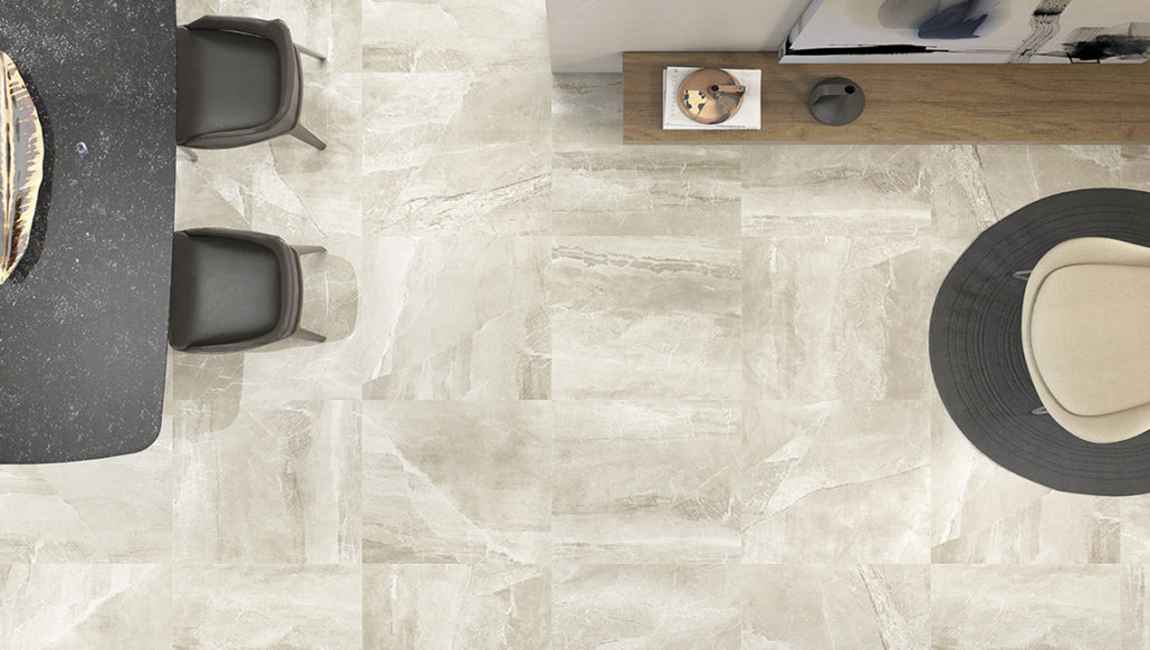
How to Remove Bathroom Wall Tile?

Protect yourself and your surroundings. Wear wraparound safety goggles, work gloves, long sleeves, long work pants, and a dust mask. Lay a canvas drop cloth over the bathtub, shower floor, or any fixtures you want to protect from chipping. Cover any drains with painter’s tape. Consider tearing apart shower walls. Shower tiles are usually installed over drywall and/or thin backerboard over drywall. Ripping the entire substrate away is much faster than removing the tiles piece by piece, but will break all your marble tiles. Chip away the rounded bullnose wood tiles from the edge and top of a shower with a hammer and chisel.
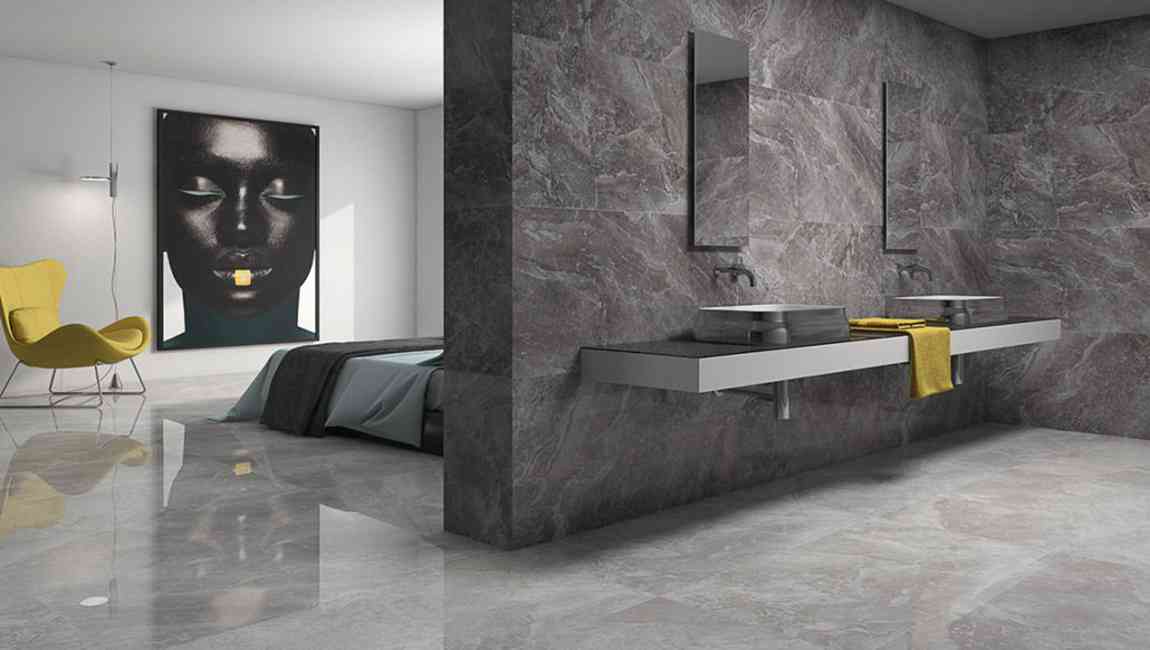
Cut through the drywall along the edge of the tiles design with a utility knife. Cut along the edge of the wall studs, if possible. A reciprocating saw is the best tool for this job. Place a pry bar against this line and lever away large sections of the wall. Work it left and right to loosen the nails holding the drywall in. Once the side walls are removed, remove the back wall of ceramic tiles by breaking small tiles in a vertical line with a hammer, then prying the exposed edge.

Chisel away polished tiles instead. This method is slower, but allows you to save some of the wall tiles for reuse. Scrape away some of the grout in a long line using a utility knife, grout saw, or rotary grinder. Place a chisel against the edge of a tile in this line, almost flat against a wall, and tap with a hammer. If all goes well, the tile will pop out. If it doesn’t budge or if a small piece chips off, remove grout from the sides and try again.

This becomes easier once the first tile is removed. An electric chisel can speed this job up. Remove adhesive. After chiseling away kitchen floor tiles, scrape away the adhesive with a putty knife or hand scraper. Try soaking the tiles in water first to soften the mortar.
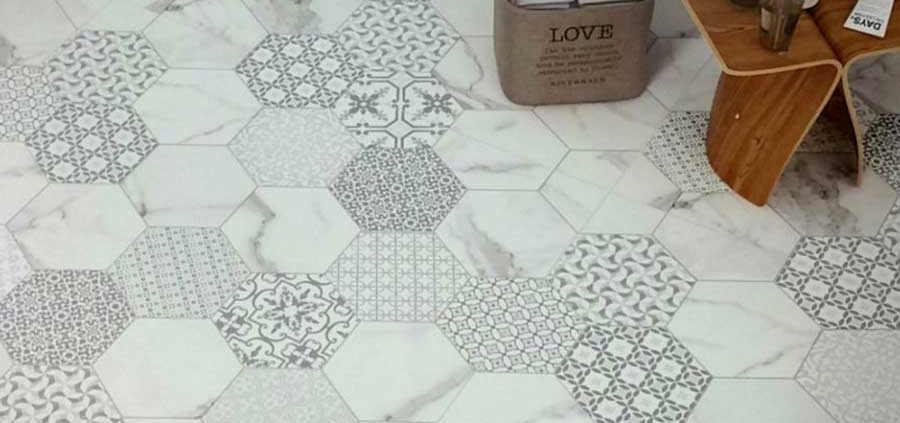

What Should We Pay Attention When Remove Bathroom Floor Tile?

Remove the marble tiles without removing the substrate.If the material beneath the wall tiles is in good condition, you can save yourself some money and leave it intact. That said, this method is slow and often causes some damage to the substrate; use your best judgement. Remove the tiles design with a flat pry bar, placing the edge low against the side of the tile and striking the base of the knife with a hammer. An electric chisel is another option. Periodically scrape adhesive off the exposed floor with a putty knife or a floor scraper.

If the ceramic tile only breaks in tiny pieces, or if you want to maximize the chance that the small tile comes out intact, scrape out the grout lines around the flooring tiles first. You may use a handheld grout saw, a carbide blade fitted onto a rotary grinder or oscillating tool, or (less effectively) a utility knife with several spare blades. A little heat from a blow dryer or heat gun may soften the grout.

Saw through plywood or cement board substrate. Chip away a row of white tiles to expose this substrate. Fit a reciprocating saw with a long blade (wood-cutting or carbide-tipped masonry cutting, depending on the material). Cut into the side of the substrate at a low angle, making a long cut to free it from the floor beneath. You can now lift the material and tile up in chunks with a flat bar. Cutting through cement board may damage the floor beneath, and roofing nails may interrupt your progress. A safer, but slower alternative is to break through the cement board with a hammer. You can then pry the cement board off the floor beneath using a pry bar.

Remove the mortar bed. Floor tiles from the 1960s and earlier were often installed on a thick mortar bed. Mortar beds were typically installed in areas where the floor was sloped for drainage, e.g., in shower areas. This is a pain to remove, but chiseling out the tiles is slow and will likely cause cracks in the mortar anyway, so it’s best to replace it now if you can afford it.

Most mortar beds are made of sand mixed with a small quantity of Portland cement tiles, and are not particularly difficult to break up. Shut off the house’s main water valve before you begin. Removing the mortar bed may damage a water pipe. Break through a small area with a chisel and sledge to the surface beneath (usually wood). Using a rotary hammer with a chisel bit (from a tool rental company), chisel around a chunk of mortar about 1 foot (0.3 m) across. Use caution when approaching the base of the bed. Complete the job by using the hammer between the wood and the mortar bed, periodically chiseling the mortar from above.

How to Remove Bathroom Floor Tile?

Removing ceramic tiles is a time consuming job, especially if you’re trying to preserve them for reuse elsewhere. If your tiles are only chipping off in tiny pieces, you may need to spend more time scraping out grout, or switch to power tools instead of a hand chisel.

Protect fixtures and usable floor with drop cloth. Remove all unnecessary objects from the room. Cover bathtubs, counters, mirrors, and other fixtures with a drop cloth to protect them from flying pieces of tile. Carefully cover any drains with painter’s tape. Lay down drop cloth over any part of the floor you plan to keep as well. For hygienic reasons, clean the bathroom thoroughly before you continue.

Remove the toilet, if necessary. If the toilet (or a pedestal sink) is covering the tile, turn off the shutoff valve on the water supply line. Flush the toilet until the tank and bowl are both dry, finishing the job with a hand-operated pump, then a sponge. Detach the tank using a wrench. Set the tank and the toilet aside on old towels or other absorbent materials. Leave the tank and bowl attached, and remove both at once.

You may need to rock the toilet back and forth to break the caulk, or cut away the caulk with a utility knife. Carefully remove the wax ring that creates a seal between the base of the toilet and the drainage pipe. You may wish to wear gloves during this process, since the wax ring is very sticky. Clean any remaining wax off the base of the toilet with a rag soaked in mineral spirits. You will need to replace the wax ring with a new one when you re-install the toilet. Consider retrofitting your toilet with a wax ring that comes with an extension to accommodate higher flanges. After removing the toilet, plug the hole with a rag to block sewer gases.

Put on safety equipment. Wear heavy-duty gloves, wraparound safety goggles, and long sleeves to protect yourself from sharp tile pieces. Wear a dust mask to protect against dust from pulverized tile. You should also wear work pants, a hat, and work boots. ceramic tiles and mortar commonly contained asbestos until the 1980s in the US, and the 1990s in some regions. Test old tiles design and mortar for asbestos and, if asbestos is found, hire a professional to remove the small tiles safely.

Even modern cement tiles often use lead glaze, which creates lead dust during removal. One tile removal project is unlikely to cause dangerous exposure, but to be on the safe side, ventilate the bathroom to the outside, and wash skin and clothes after completing the project. Buy a respirator mask rated for lead dust if you expect repeat exposure.

Break through the first tile.Use a cold chisel and sledgehammer to break apart one tile, and deposit the pieces into a bucket. This will give you a look at the subsurface, which can help determine your approach. Read through the rest of this section before you decide how to continue. If you want to preserve as many tiles intact as possible — which is difficult and time-consuming — first cover the center of the tile with masking tape and drill several holes through it with a carbide-tipped drill bit. This will reduce the number of flying pieces that can chip nearby tiles.

What Should We Do After Install Marble Floor Tile?

Adding the Finishing Touches. Seal the marble tiles.Marble porcelain tiles is very soft and prone to damage so it is important to apply a coat of high quality marble sealing agent before proceeding with the grout. This seal is also important because marble flooring is very porous and grout can cause stains in the tiles. Apply the sealing agent over the tops of the marble. Even if you prefer the color and look of unsealed marble floor tiles you can use a “grout release”-type sealer to prevent grout from sticking to the marble tiles design.

Mix grout according to the instructions on the packaging.Grout, or mortar, will be used ot fill in the spaces between the cement tiles. Be sure to wear a dust mask, safety goggles, and heavy-duty work gloves. Wear a long-sleeve shirt to avoid any possible damage to your skin from contact with the grout. Mix only enough as will be used in 15-20 minutes of work or else the extra can dry out and harden. .Dampen the spaces between the tiles design using a moist sponge. This prepares the spaces for the grout or mortar.

Fill the spaces with cement. Spread the concrete evenly over the spaces between the wall tiles using a squeegee. Be careful to avoid getting wood tiles on the tops of the floor tiles. Some will inevitably get on top of the tiles but you want to minimize the amount. Try to push it into the spaces as much as possible to create a tight fight. Wipe up any grout on top of the tiles as you go.

Use a squeegee to spread out the grout. Use a squeegee to spread out the grout and leave a smooth surface in the cracks. You can also use a gloved finger to run down the grooves and smooth the top of the grout. Use a clean sponge to wipe down the surface of the wood marble tiles. Use a damp sponge to wipe down the tops of the tiles to remove any excess grout. Try not to get extra moisture into the grout or else it can make it too wet.

Allow the grout to dry. Allow the grout to dry for the length of time required by the manufacturer. Some will require long curing times to ensure maximum strength. Seal the grout. Use a disposable sponge applicator to paint the grout with a grout sealer. This will help prevent stains and dirt from permanently discoloring the grout. It will also make cleaning easier later on. Clean tools with water or acetone. Clean your tools with water or acetone to remove the excess grout or mortar and prepare them for use once again.

How to Install Marble Floor Tile?

Place the marble tiles in the pattern. Place your tiles within the grid you have created. This dry-run allows you to identify areas where you will need to cut floor tiles to fit and will help you determine the best place to start laying the tile based on your pattern and the shape of the area you plan to tile. If the gap between the last complete tile and the wall is less than 2 inches (5 cm) then you should move the center tile over. This makes the strip of tile in this area wider, which will look nicer when you lay your tiles design.

Apply a layer of thin-set adhesive on the floor surface using a notched trowel. Be sure to wear heavy-duty work gloves and work one section of the floor at a time. The adhesive should be thick enough that you can use the notched edge of the trowel to make grooves in the adhesive without showing the floor below, but thin enough that it does not push up between the cement tiles. The grooves ensure that the adhesive spreads evenly on the back of the wall tiles. Choose the adhesive recommended for your type of marble. Ask at the location where you purchase your tiles about the proper adhesive to use.

Lay wood marble tiles firmly in the thin-set adhesive. Lay the wood tiles on top of the adhesive within 10 minutes of applying the adhesive. Be careful not to slide the small tiles into place or get adhesive on the top of the tiles. Sliding the tiles into place will push up the adhesive and make the tiles uneven, causing them to crack. Adhesive will be difficult to remove from the tops of the tiles.

Position the tiles in place using spacers.Use spacers to create the correct spacing between the ceramic tiles and keep them even with straight lines along the rows and columns. You should use 1/8 inch (3 mm) marble tile spacers. Spacers help ensure proper placement of the tiles.

Check the level of the tiles.Check the level of the tiles to ensure that no edge “lips”, or rises above the rest of the tiles. Take a length of wood and lay it across the tops of the common marble tiles, using a hammer to lightly tap the wood down. This ensures that all the tiles are at the same level. Use the piece of wood in both directions along the grid to make all the tiles exactly the same level.

Measure the dimension of any partial tiles needed by placing one tile on top of the full tile closest to the wall.Place another tile against the wall so that the edge of the second tile lays on top of the first tile. Score a line in the first tile using a utility knife to mark your cut line for the correct width of tile needed.

Use a wet saw to cut the tiles to fit in the edges along the walls or special spaces.In order to minimize the risk of tiles breaking when they are being cut, saw three-fourths of the length of the tile, turn the tile around and then cut the remaining length. Repeat the process until you have cut all the specially sized tiles and placed them into the adhesive. You can usually rent a wet saw for a day from a local hardware store or tool rental company.

Remove any excess adhesive between the tiles.If you have put too much adhesive beneath the tiles or push the tiles down too hard then it can push up between the tiles. If this has happened then you must take a small knife to cut out these extra bits. Leave tiles undisturbed 24-48 hours to allow adhesive to dry completely. Different adhesives take different lengths of time so check the adhesive instructions for the proper drying time. Do not step on the tiles during this time or else you can make them uneven.

What Should We Do Before Install Marble Floor Tile?

Installing marble flooring can add beauty and elegance to a bathroom or foyer. With a variety of options in coloring and finish, marble tiles can complement virtually any color scheme. Installing marble floor tile is not an easy process but can be done on your own if you are careful and patient.

Wear gloves, eye protection and a facemask. These will protect your hands, eyes and lungs as you install your marble tiles design. Remove any existing tiles. If you are installing the marble on a floor that is already tiled then you must remove the old tiles first. Ceramic tiles can be smashed with a hammer and then removed. Vinyl tiles should be ripped up with a pry bar. Clean the floor surface you plan to tile and allow it to dry. Before installing any tiles you will want to make sure that the floor surface beneath the tiles is thoroughly cleaned and dried.

Use a long level to make sure the floor area is level. Marble is a very soft tile and can be particularly susceptible to cracking if it is not installed on a level surface. Use the longest level possible to make sure your floor is level. You can try sanding down any bumps that raise the floor or filling in any depressions in the floor surface with thin-set cement. Wait for the cement to completely dry before continuing. You may also need to lay a plywood subfloor to make the floor level. Marble should not be installed on a floor that has a change in height that is more than ¼ inch (6 mm) in a distance of 10 feet (3 m).

Inspect the tiles. Run your finger nails over the wood tiles to make sure there are not cracks or gaps in the polished surface of the tile. You should not use any polished tiles that have these cracks or gaps because they might break in the process of installation or use. Most hardware stores will accept exchanges of kitchen tiles that have cracks or gaps in them.

Measure the length and width of the floor and create a layout on paper.Plan your installation on paper using the floor dimensions and sizes of the wall tiles. Decide on your pattern for laying the tiles. You can lay them in rows or in a pyramid-like structure or in other patterns. Draw the pattern to scale on paper. You want to keep most tiles full-sized so that you do not have to cut them. You also do not want strips of tile that are less than 2 inches (5 cm) wide.

Mark the center of your floor tiles. Measure the center of each wall and make a light mark with a pencil. Then take a chalk snap line and hold it to either end of the centers of two opposing walls. Lower the line and snap it to the floor to make a chalk line. Do this for the other two walls as well. Where the two chalk lines meet is the center of your floor. You usually want marble wall tiles to radiate from the center of your floor. Mark your grid on the floor using the chalk line. Continue snapping the chalk line on the floor in the planned grid. This will mark down where your tiles should go.

What Should We Do After Laying Floor Tiles?

Spreading Adhesive, or Mastic, and Laying ceramic Tiles. Pick up all tiles design and set aside. On your prepared surface, begin spreading the adhesive with the notched trowel. You will start from the center point, work only in one quadrant, and apply small sections at a time, following the pattern during the rehearsal. Spread adhesive evenly, then using the notched edge, make a raking motion. You should have grooves neither too deep nor too shallow. Set the first tile in place at the corner lines made by the center point. Do not twist cement tiles; simply press the tiles down firmly yet softly.

Set marble tiles spacer and then continue with additional marble floor tile. (Remember to set polished tile spacers after each tile). Use your level to determine degree of level of the marble stone tiles as you go along. (Not all surfaces are perfectly level). If slightly uneven, either manipulate the small tiles or add a little more adhesive to the floor until level. Usually, after a quadrant is complete, remove the tiles spacers so they do not set into the adhesive. Follow this process for the remainder of the floor, making sure to check the level as you go along. Wait. After the tiles have been set, it is usually advised to wait at least one day (or overnight) to allow the adhesive to dry, or cure. After the adhesive has cured, you will grout the joints.

Grouting. Continue working in quadrants as before. Using a rubber float, apply only enough grout as you can effectively work with. In a diagonal direction, press grout into the joints to an even level with the tiles. Skim excess from tile with the rubber float. You will notice a mild “grout haze” on your wood marble tiles. Wait a few minutes for the grout to stiffen up in the joints. Use a damp sponge work across the joints, (working along joints can drag out too much grout) to remove grout haze from tiles and finish the joints, make sure not to press too hard on joints. As you work, check each joint is full and smoothly finished. Continue this process with other joints in remaining quadrants.

Consider caulk. For joints at the wall tiles and floor interface it is best to use caulk instead of grout. There are benefits to using caulk along wall joints. All polished porcelain tiles may expand or contract depending on temperature fluctuations. The wall joints are also known as expansion joints. Using caulk here will buffer expansion and contraction a bit. Let the floor cure.Wait for the entire floor to cure for about a week before giving it a good mopping to remove remaining grout haze. You may also choose to seal the grout with a sealer to lock out dirt and or grease.

The Knowledge of Laying Floor Tiles

You will use 3 full tiles and 1 tile cut to 4 inches (10.2 cm), since the size of the 3 joints plus the 1 wall joint equals 2 inches (5.1 cm) and your original tiles size was 6 inches (15.2 cm) (6 inches original tiles– 2 inches total joint= 4 inch tiles). Note that this does not follow the realignment strategy mentioned above. Because this room is “squared,” the true center is best left where it actually is. Simply make uniform cuts as they correspond to each side (in this case, you will have 9 inch (22.9 cm) tiles as the wall tiles on the “short” 7 foot (2.1 m) walls and 4 inch (10.2 cm) marble tiles on the long 12 foot (3.7 m) walls.

Follow the same process for the other three quadrants. Because this design is uniform, it is best to follow the same size cuts all the way around. Pre-drill some wood tiles to fit over items such as radiator pipes, bath pipes, and so on. To achieve this you may have to drain down radiator systems, remove the rad from the wall and take the taps off the pipework. Very time consuming but worth the effort if a minimal look is desired. Your floor will look better if you can drill a hole in the small tiles and lay the tiles design over the pipe.

Use a diamond hole saw to bore into the wood marble tiles and drill a perfect hole. If you do not have a hole saw you can use a wet-tile saw to cut a square hole in the center of the kitchen floor tiles. Draw a square on the back of the polished tiles in the desired location of the hole. Carefully place the backside of the floor tiles against the wet-saw blade at the midpoint of one of the sides of the square. Gently push the tile against the the blade until the edge of the square is cut. Repeat for the other sides of the square hole. When your floor is rehearsed and all ceramic tiles are laid, measured, and cut, and appear to your liking, you are ready to lay the adhesive,

Cut the cement tiles board with a jigsaw or a carbide-tipped scoring tool. If you need to cut non-linear shapes out of your cement board, use a jigsaw and a carbide-tipped blade. If, however, you’re only cutting straight lines out of the cement board, use a carbide-tipped scoring tool (it costs $10) and a straight edge.

Finish up by mudding and taping the joints of the cement board. This process is almost exactly like mudding and taping drywall, except you’re using mortar instead of compound and fiberglass mesh tape instead of joint tape. Lay down a bit of mortar with your trowel, then press the fiberglass mesh tape into the joint. Then go over the mesh tape with your trowel, pressing it into the seams and locking it firmly in the mortar. Smooth out the resulting joints so that they don’t bulge out, feathering the edges.

How to Lay a Ceramic or Porcelain Tile Floor?

Decide on your tiles size and pattern. tiles come in different sizes: 4 inch (10.2 cm) by 4 inch (10.2 cm), 8 inch (20.3 cm) by 8 inch (20.3 cm), 12 inch (30.5 cm) by 12 inch (30.5 cm), for example (there are others, too). marble tiles can also be laid in different patterns. The total number of tiles you will need will depend on the size and pattern you want. For simplicity’s sake, let’s assume we are going to use 12 inch (30.5 cm) by 12 inch (30.5 cm) tiles and use a traditional grid design, where tiles are simply laid in pattern like graph paper.

Because the area of the room is 84 square feet, we will need about 84 12 inch (30.5 cm) x 12 inch (30.5 cm) (1 square foot) floor tiles (even accounting for the spaces in between tiles, known as “joints”). However, it is a good rule of thumb for beginners to purchase extra tiles to account for improperly cut or scored tiles, or for breakage. Buy an extra pack or two of wall tiles to be safe. When laying tile diagonally, a lot of material is wasted as cutoffs. A good rule of thumb here, even for experts, is to buy 15% more tile than the square footage would dictate.
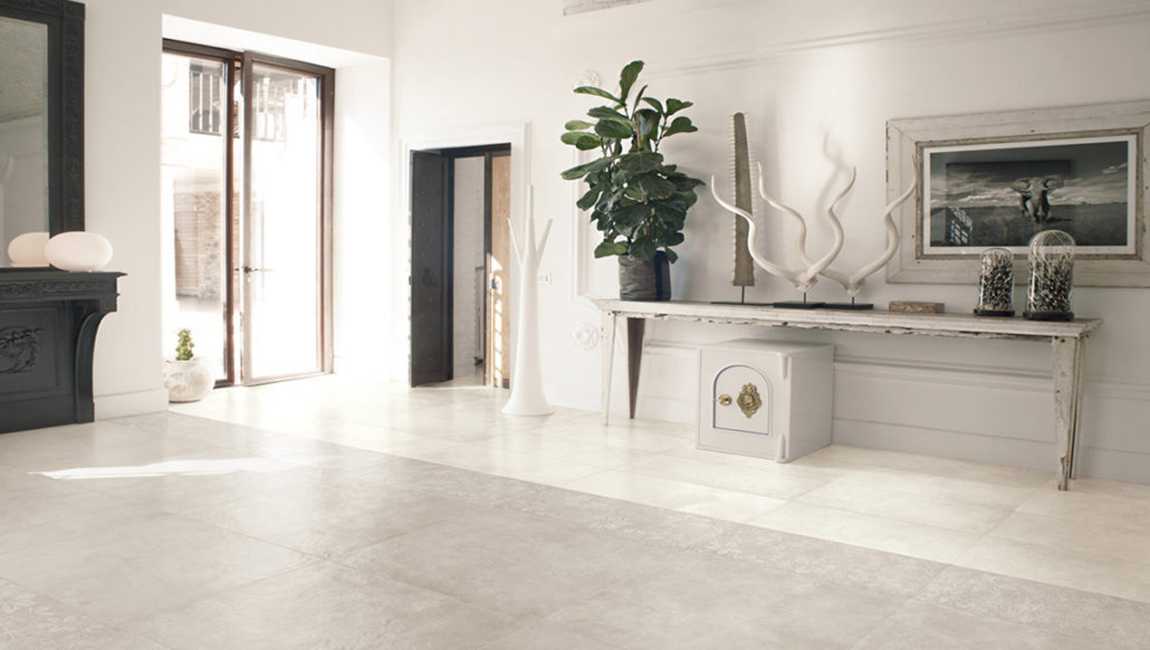
Pick a color.You are only limited by your imagination (and the store’s stock). Choice of color typically is a matter of individual choice. The only additional step of planning and preparation with regard to color of the tile is with the grout selection. Grout is the “filler” that goes in the spaces between tiles, the joints. It can be grey, white, terra cotta, and so on. Typically, dark tiles with light grout really show the spaces in between tiles, and vice versa. The selection of grout color will really depend on how you would like the floor to look to the eye. There is no hard and fast rule.

Prep your space. Be sure that the entire surface is as smooth as possible. You will likely need to use floor leveling compound (available at your do it yourself hardware store) to float (create gradual transitions in the floor’s surface) out any divots, holes, or differences in subflooring heights. If you don’t “float” out these differences your cement tiles will crack. Your surface is now prepared for tiling.

Find your center point. You have already determined the size of your room, which is 84 square feet. Finding the center point is critical for laying the wood tiles. It will determine where you will lay your first kitchen tiles and the next ones. Measure one wall, for example the 12 foot (3.7 m) wall. At 6 feet (1.8 m), half the distance, mark a point with a pencil. Do the same on the other 12 foot (3.7 m) wall. Using your chalk line, anchor one end at the midpoint of one wall and stretch across to the midpoint of the other. “Snap” the chalk line by lifting it up slightly and letting it hit the ground; this will leave a straight line on the floor. Measure the 7 foot (2.1 m) walls and mark a point a 3 ½ feet on both sides.

Rehearse laying out ceramic tiles.When you have found your center point, you will notice you will have a “quadrant” design on the floor, or 4 equally sized areas. Starting at the center, “rehearse” your tile pattern by simply laying them on the floor without any adhesive or glue. Place the first tile at the corner nearest the center point. You are only going to work in one quadrant at a time. Begin placing tiles design in a straight line towards either wall, leaving a small space in between the tiles.

What Should We Do Before Laying Ceramic or Porcelain Tiles Floor?

Laying a ceramic or porcelain tile floor can be considered a daunting task, but with adequate planning and preparation, this perception can be overcome. Laying one’s own polished tile is also much less expensive (and possibly more rewarding) than having it professionally installed. Cost can be minimized by careful planning and preparation.

Laying the foundation. An unpleasant question to be faced is “What is your floor made up of?” Plywood is good. But, if you have the typical 1/2″ to 5/8″ particle board on top of a deck made of 2x8s, you have some work to do. After removal of the base trim, the particle board should be pulled up (this is easiest if you first cut it into about 16″ squares)and replaced by plywood. You will need a Skil saw, and if you’re doing the kitchen, you’ll need a “toe-kick saw.” Replace the particle board up to where the wood tile will stop. While you have the particle board off, you can inspect the deck to make sure it is firmly attached to the floor tiles joists. Now you’re ready for leveling compound (if needed).

Lay the backer board. You will need to lay backboard (fiberglass or preferably cement tiles sheets that are usually 3 by 5 feet) as well, or the tiles design will pop off. Evaluate the wall tiles space to be tiled. A first phase of evaluation is to determine the size of the room to be tiled (or re-tiled). The number of kitchen tiles you will need will depend on the size of the tiles you wish to lay, as well as the small tiles pattern you will like on the floor. Using a tape measure or digital laser tape, measure the room from one wall to the opposite wall, and note the distance. Let’s say the measure of this distance is 12 feet (3.7 m). Measure the distance of the opposing walls to each other. Let’s say this distance is 7 feet (2.1 m). Multiplying these 2 distances (12 feet x 7 feet) will yield a total area of 84 square feet.

These measurements are based on squared dimensions. If the room is not perfectly “squared” (or in this case “rectangle”) because of an irregular floor plan (where there might be a small section off of one side, for example), do not factor this space into your measurement. While you will of course need to marble tile this space, factoring this space into your measurements will affect finding the “center” of the room, which will be discussed shortly. This area is important to note, since it will provide you with an estimate of the number of tiles you will need to purchase to cover the area to be tiled.