Posts

From China to Latin America: A Green-Compliant One-Stop Building Materials Supplier’s Rise to Industry Leader

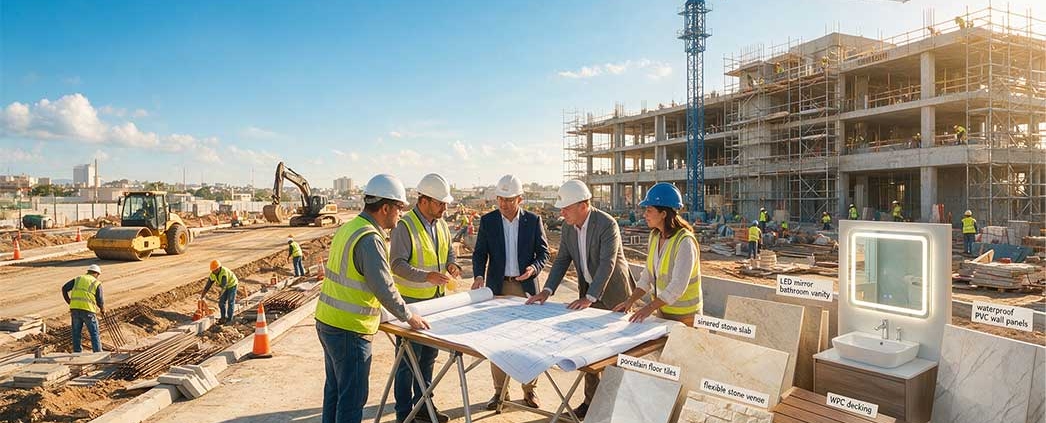
Positioned as Latin America’s leading green-compliant one-stop building materials solution provider, our company has spent over a decade transforming from a Chinese exporter into a regional benchmark enterprise. We deliver integrated solutions combining project-based packaging, rapid response, and full-category consolidation — creating long-term value for customers across the Americas. Our product portfolio includes ceramic tiles, porcelain tiles, floor tiles, bathroom vanities, sintered stone, flexible stone veneer, WPC decking, and PVC wall panels.

Our Service Footprint

Our market coverage spans 70% of Central and South America, complemented by a growing presence in Africa, Central Asia, and the Middle East. We serve large wholesalers, retail chains, project contractors, small B2B buyers, and design studios — each with unique requirements demanding tailored solutions.

Our product system encompasses green, intelligent, and design-driven materials. From ceramic tiles and porcelain tiles for residential and commercial flooring to sintered stone and large slab countertops for kitchen surfaces; from bathroom vanities, one-piece toilets, and LED mirrors combining water efficiency with contemporary design to flexible stone and bendable stone veneer enabling curved facade innovations. Our WPC decking, WPC doors, and outdoor flooring deliver sustainable, low-maintenance outdoor solutions, while PVC wall panels and waterproof wall panels provide moisture-resistant, low-VOC alternatives for wet areas.

Three Core Differentiators

One-Stop Solution Provider. We are not merely a supplier — we are a solution enabler. Clients source their entire material requirement from a single partner, reducing procurement complexity and supplier management costs. From floor tiles to sintered stone to WPC decking, our full-category matrix ensures consistency in quality and delivery.

Panama-Based Localization. Our strategic Panama headquarters enables “same-day inquiry, same-day response” service. We understand each market’s regulations, from Brazil’s ABNT to Mexico’s NOM, with Spanish and Portuguese documentation and responsive technical support.

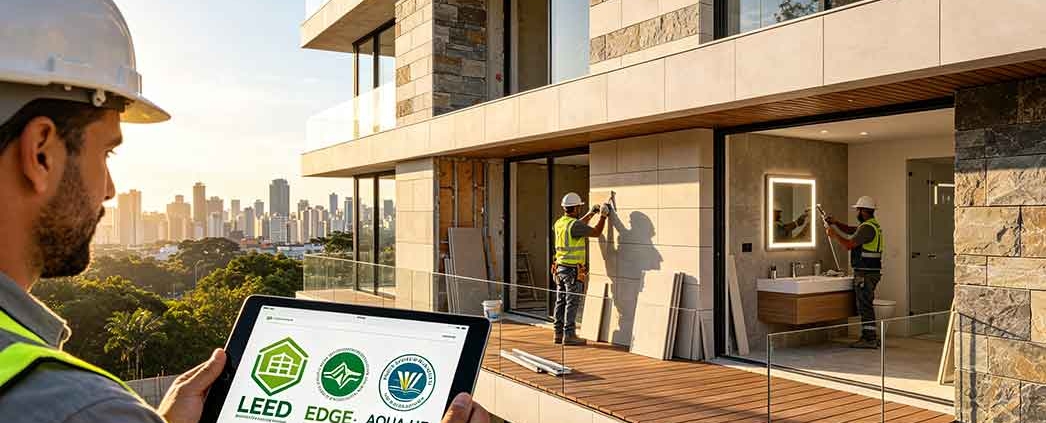
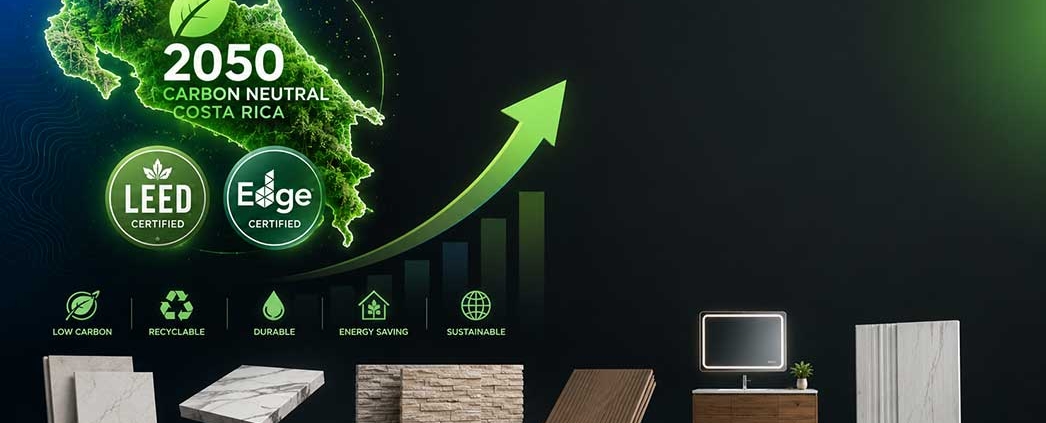
Green Compliance Leadership. Our products are pre-qualified for LEED, EDGE, and AQUA-HQE requirements. From low-emission PVC wall panels to recycled-content porcelain tiles and responsibly sourced sintered stone, we guide clients through the complex compliance landscape.

Creating Long-Term Value

For wholesalers, we consolidate multiple categories — from ceramic tiles and bathroom vanities to WPC decking and waterproof wall panels — simplifying procurement and reducing overhead. For contractors, our engineering packaging ensures on-time delivery of coordinated material sets. For design studios, our green-compliant, design-forward products — including flexible stone veneer and LED mirrors — enable sustainability goals without compromising aesthetics. We provide regulatory guidance, certification documentation, and technical training that help customers reduce costs, ensure compliance, and upgrade quality.

Looking Ahead

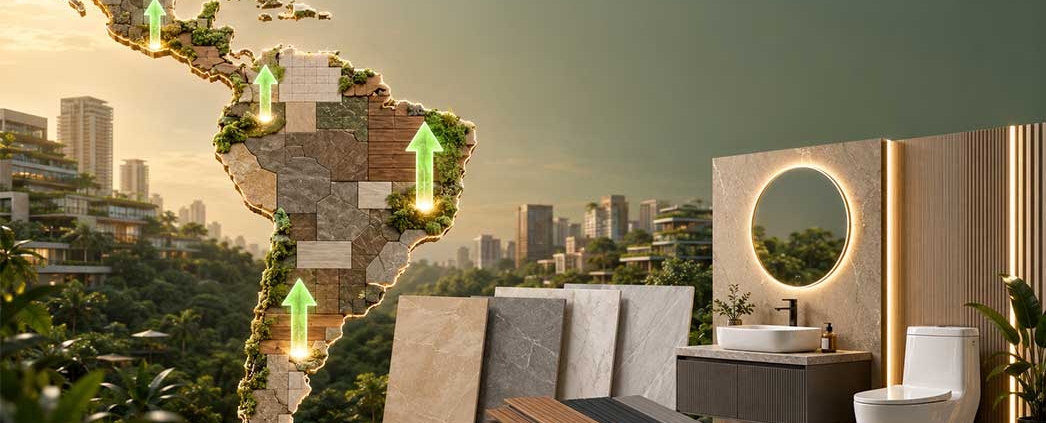
The Latin America green building materials market, valued at US$24.9 billion in 2025, is projected to double to US$49.8 billion by 2034. As a leading one-stop building materials supplier to Latin America, we are committed to deepening our presence, expanding our portfolio, and strengthening our green compliance capabilities. For suppliers of porcelain tiles, sintered stone countertops, WPC decking, bathroom vanities, flexible stone panels, and PVC wall panels, the region offers unparalleled growth opportunities — and we remain the partner of choice.

Latin America Green Building Materials Market: From $24.9B to $49.8B – Who’s Driving the Green Revolution?

The Latin America green building materials market reached US$24.9 billion in 2025 and is projected to double to US$49.8 billion by 2034, representing a compound annual growth rate of 7.76%. This remarkable growth is fueled by three powerful forces: government regulations mandating sustainable construction, rising environmental awareness among consumers, and strong demand for green materials across residential, commercial, and infrastructure projects. For suppliers of ceramic tiles, porcelain tiles, floor tiles, bathroom vanities, sintered stone, flexible stone veneer, WPC decking, and PVC wall panels, this market expansion represents a significant opportunity to establish a presence in one of the world’s fastest-growing construction regions.

Four Key Drivers of Market Growth

Government Regulations and Sustainability Initiatives
Latin American governments are implementing increasingly stringent building energy codes and carbon reduction policies. Mexico’s Sustainable Building Law (2023) mandates green materials for all public infrastructure projects. Brazil strengthened its ABNT green building standards in 2025, while Colombia’s Resolution No. 0194 of 2025 updated national sustainable construction guidelines. These regulatory frameworks create sustained demand for certified green materials across all construction segments.

Rising Environmental Awareness

Consumers across Latin America are increasingly concerned about the environmental impact of buildings. This awareness is forcing developers to incorporate green materials into their procurement specifications. From energy-efficient LED mirrors and water-saving one-piece toilets to low-VOC waterproof wall panels and recycled-content porcelain tiles, buyers are demanding products that minimize environmental footprint while delivering superior performance.

Urbanization and Population Growth

Rapid urbanization across Latin America is generating massive construction demand. As cities expand, green building practices become essential for sustainable urban development. This trend drives demand for sintered stone countertops in new kitchens, flexible stone veneer for architectural facades, and WPC decking for outdoor spaces in residential and commercial projects.

International Capital Pressure

International financial institutions are imposing increasingly strict green financing conditions on Latin American projects. Colombian banks offer 0.5–2% interest rate reductions for LEED or EDGE certified projects, creating a powerful financial incentive for developers to specify certified materials. This trend is accelerating adoption of green building certification systems across the region.

Green Building Practices Across Latin America

Argentina has embraced green building certification, with notable LEED-certified projects including Alvear Tower and GNP Seguros Tower in Buenos Aires. The National Housing Institute has established green building standards that are shaping residential construction practices across the country.
Brazil leads the region in green building adoption, with São Paulo’s 71% of luxury developments holding green certification — surpassing Miami, Los Angeles, and New York. The country’s extensive LEED-certified project portfolio (over 1,000 projects) sets the benchmark for sustainable construction in Latin America.
Peru is integrating renewable energy systems and smart water management into major developments in Lima, demonstrating the region’s growing commitment to holistic sustainability. These projects create demand for sustainable bathroom vanities, water-efficient one-piece toilets, and energy-saving LED mirrors.
Across all these markets, suppliers of ceramic tiles with recycled content, sintered stone with responsible sourcing, flexible stone panels for innovative facades, WPC doors for durable interiors, and PVC wall panels with low emissions are finding growing acceptance.
Green building materials are not a passing trend — they are an established market reality. The US$24.9 billion Latin America green building materials market is just the beginning. By 2034, this market will double to US$49.8 billion. For suppliers of porcelain tiles, floor tiles, sintered stone countertops, bathroom vanities, flexible stone veneer, WPC decking, and waterproof wall panels, the question is not whether to enter this market, but how quickly they can establish green compliance, local partnerships, and supply chain capabilities. The green revolution in Latin American construction is here — and it is accelerating.

Mexico Green Building Materials Market 2026: $1.2 Billion Opportunity Under the Sustainable Building Law

Mexico’s green building materials market is valued at approximately US$1.2 billion and is projected to grow at a CAGR of 11.97% through 2034. In 2023, the government implemented the “Sustainable Building Law,” mandating green materials for all public infrastructure projects — covering roads, bridges, schools, and hospitals. This policy is reshaping procurement and creating a structural entry point for suppliers of ceramic tiles, porcelain tiles, floor tiles, sintered stone, flexible stone veneer, WPC decking, bathroom vanities, and PVC wall panels.

Policy-Driven Market Transformation

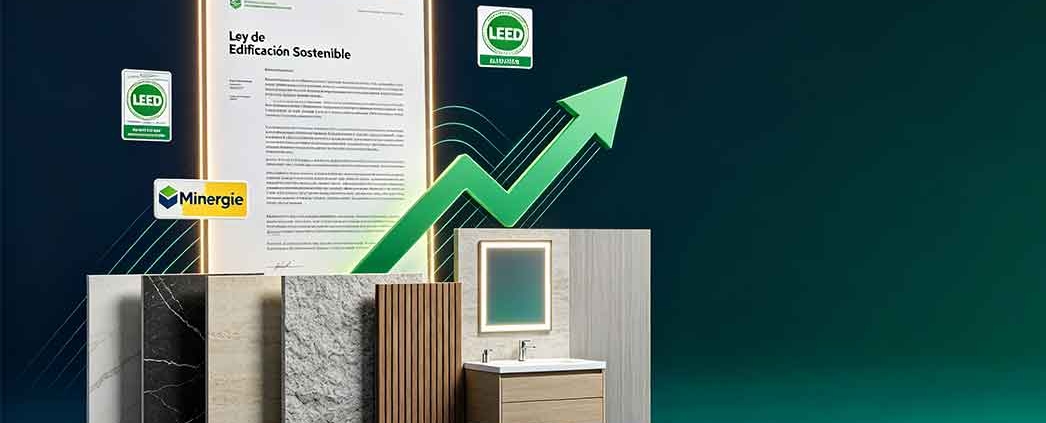
Mexico’s Sustainable Building Law requires all public works to use certified green materials, driving sustained demand for compliant products. The NOM-251-SE-2025 steel standard, effective February 2026, imposes mandatory certification requirements on steel imports, signaling stricter compliance across all building material categories. In 2025, Mexico published its “Sustainable Building Green Financing Guide,” reducing capital costs for developers who adopt sustainable materials. Additionally, Minergie was approved as a certification standard for Mexico’s low-carbon building bonds in December 2025, while LEED certification continues to grow — Mexico ranked sixth globally in the USGBC’s 2024 rankings. For suppliers of porcelain tiles with recycled content, sintered stone with responsible sourcing, and low-VOC PVC wall panels, these regulatory tailwinds create immediate and sustained market demand.

Product Opportunities in the Mexican Market

The Mexican market offers substantial opportunities across multiple green building product categories. The lightweight building materials market reached US$6.54 billion in 2025, with recycled steel, cross-laminated timber, and autoclaved aerated concrete in high demand. Hempcrete is projected to grow from US$210 million to US$1.06 billion by 2031 at a 31.2% CAGR.
Beyond these, demand is surging for ceramic and porcelain tiles with recycled content and low-emission production, sintered stone and large slab countertops valued for durability and heat resistance, WPC decking and WPC doors for outdoor and resort applications, bathroom vanities, one-piece toilets, and LED mirrors meeting water and energy efficiency requirements, and PVC wall panels and waterproof wall panels offering low-VOC, moisture-resistant solutions for wet areas. As a floor tiles supplier to Latin America or a sintered stone supplier to Mexico, companies that document sustainability credentials will win specifications in government and private projects alike.

What This Means for Chinese Suppliers

Mexico is a critical export destination for Chinese building material suppliers. Success requires mastering three essentials: understanding Sustainable Building Law compliance documentation, staying ahead of evolving NOM standards, and building localized service capabilities with Spanish-language support. Suppliers of flexible stone veneer, bendable stone panels, WPC decking, bathroom vanities, and waterproof wall panels who invest early in compliance and local partnerships will capture significant market share in this fast-growing market.
Mexico’s green building materials market, valued at US$1.2 billion and growing at nearly 12% CAGR, represents one of Latin America’s fastest-growing opportunities. The Sustainable Building Law, NOM standards, and expanding certification options are creating sustained demand across all product categories. Suppliers who invest in compliance, documentation, and local partnerships will lead this market transformation.

LEED, EDGE, AQUA-HQE: Your Guide to Latin America Green Building Certifications 2026

Green building certifications have become the “access language” for the Latin American building materials market. Without understanding these certification systems, it is impossible to grasp what your customers truly need and expect. LEED, EDGE, and AQUA-HQE — three major green building certification frameworks — are defining procurement standards across the region. For suppliers of ceramic tiles, porcelain tiles, floor tiles, bathroom vanities, sintered stone, flexible stone veneer, WPC decking, PVC wall panels, and waterproof wall panels, knowing these certifications is not optional — it is the price of entry.

The Three Major Certification Systems Explained

LEED (Leadership in Energy and Environmental Design)
Developed by the U.S. Green Building Council (USGBC), LEED is the most widely recognized green building certification globally. Brazil leads Latin America with over 1,000 LEED-certified projects, while adoption is growing rapidly in Colombia, Mexico, Chile, and Costa Rica. Many public projects across the region now mandate or give priority to LEED certification, making it essential for suppliers of building materials to understand LEED credit categories. Products like porcelain tiles with recycled content, sintered stone with regional sourcing, and low-VOC PVC wall panels can contribute valuable points toward LEED certification.
EDGE (Excellence in Design for Greater Efficiencies)
Developed by the International Finance Corporation (IFC), EDGE requires at least 20% energy savings, 20% water savings, and 20% reduction in embodied carbon in materials. This certification is particularly relevant for suppliers of water-efficient one-piece toilets, energy-saving LED mirrors, and durable WPC decking that reduces maintenance and replacement cycles. In Colombia, EDGE Advanced or LEED Gold/Platinum projects can access dedicated green financing, creating a strong commercial incentive for developers to specify EDGE-compliant materials.
AQUA-HQE (High Environmental Quality)
AQUA-HQE is a certification system that combines international standards with Brazilian regulations, making it highly influential in the Brazilian market. Based on the French HQE (Haute Qualité Environnementale) framework, AQUA-HQE is adapted to local climatic, regulatory, and cultural conditions. It evaluates buildings across 14 targets, including health, comfort, and environmental performance. For suppliers of bathroom vanities with sustainably sourced wood, flexible stone veneer with low environmental impact, and waterproof wall panels with low emissions, AQUA-HQE presents a clear pathway to market acceptance.

How Certifications Impact Building Material Procurement

Green building certifications impose clear technical specifications on building materials — from embodied carbon and recyclability to indoor air quality and VOC (Volatile Organic Compounds) content. Here is what each certification means for suppliers:
For ceramic and porcelain tiles, certifications reward products with recycled content, regional manufacturing, and low-emission glazes. A floor tiles supplier to Latin America who can document these attributes gains a competitive edge in LEED and EDGE projects.
For sintered stone and large slab countertops, LEED credits are available for materials with extended durability, low maintenance, and responsible sourcing. As a sintered stone supplier to Brazil and Colombia, demonstrating compliance with certification requirements is key to winning specification in high-end residential and commercial projects.
For flexible stone veneer and bendable stone panels, these innovative products contribute to design flexibility and thermal performance, earning credits under LEED’s Material & Resources category and EDGE’s embodied carbon metrics.
For WPC decking, WPC doors, and outdoor flooring, certifications reward materials with recycled content, long service life, and low maintenance. As a WPC decking supplier to Latin America, highlighting these attributes is essential for gaining acceptance in LEED and EDGE projects.
For bathroom vanities, one-piece toilets, and LED mirrors, EDGE’s water and energy efficiency requirements directly align with product performance. Suppliers who can provide third-party test reports for water consumption and energy use will win specifications in EDGE-certified developments.
For PVC wall panels and waterproof wall panels, low VOC emissions and indoor air quality compliance are critical for LEED’s Indoor Environmental Quality category and AQUA-HQE’s health targets. As a green panels supplier to South America, documenting these properties is the key to unlocking project specifications.
Suppliers who can provide the required test reports and compliance documentation will secure a significant competitive advantage. The ability to demonstrate certification alignment is becoming as important as product quality itself.

Recommendations for Chinese Suppliers

For Chinese building material suppliers looking to enter the Latin American market, building green compliance capabilities should be a top priority. Here are three essential steps:
First, invest in product certification. Understand which LEED, EDGE, or AQUA-HQE credits your products can contribute to, and obtain the necessary third-party testing and certifications. For ceramic tiles, sintered stone, and flexible stone veneer, this may involve recycled content verification; for one-piece toilets and LED mirrors, water and energy efficiency testing; for PVC wall panels and WPC decking, VOC emissions and durability testing.
Second, establish a compliance documentation system. Latin American buyers require comprehensive technical files, test reports, and certification documentation. Having these documents ready in both English and Spanish/Portuguese will significantly accelerate procurement decisions.
Third, build relationships with local certification consultants. Partnering with experienced local advisors who understand each country’s regulatory nuances will help navigate the complex certification landscape and position your products effectively.
LEED, EDGE, and AQUA-HQE are not just acronyms — they are the gateways to Latin America’s green building revolution. For suppliers of ceramic tiles, porcelain tiles, floor tiles, bathroom vanities, sintered stone, flexible stone veneer, WPC decking, PVC wall panels, and waterproof wall panels, understanding these certification systems is essential for success. The companies that invest early in certification alignment, documentation, and local partnerships will capture significant market share as the region’s green building regulations continue to tighten. The window of opportunity is open — compliance is the key.

Brazil Green Building Materials Market 2026: COP30 Host Drives Demand for Tiles, Sintered Stone, WPC Decking & More

As host of COP30 in 2025, Brazil has set a global benchmark in green building. São Paulo now ranks 12th worldwide for sustainability‑certified buildings, with 71% of luxury developments holding a green seal – surpassing Miami (66%), Los Angeles (65%), and New York (61%). Brazil’s green building practices are reshaping procurement standards across the entire Latin American building materials market, creating unprecedented opportunities for suppliers of ceramic tiles, porcelain tiles, floor tiles, bathroom vanities, sintered stone, flexible stone veneer, WPC decking, and waterproof wall panels.

Brazil’s Green Building Policy Framework

Brazil has built a comprehensive regulatory system to drive sustainable construction. The ABNT NBR 15575 standard defines performance requirements for safety, durability, and thermal efficiency, while NBR 15220 and NBR 16401 regulate building thermal performance and HVAC systems. From 2027, all federal government buildings must achieve the highest ENCE energy efficiency rating (level A), spurring demand for insulation, high‑performance glazing, and efficient fixtures.
The country leads Latin America with over 1,000 LEED‑certified projects, alongside widespread adoption of AQUA‑HQE and EDGE certifications. In a bold move, Rio de Janeiro’s INEA Resolution No. 318/2025 allows companies adopting ESG standards to receive up to six‑year extensions on environmental licenses – a powerful financial incentive that accelerates green material adoption across all construction segments.

Market Opportunities for Green Building Materials

Demand for sustainable materials is expanding rapidly from public works into commercial and residential construction, creating substantial opportunities across multiple product categories.
Ceramic and porcelain tiles are experiencing strong demand, driven by Brazil’s booming residential and hospitality sectors. As a leading floor tiles supplier to Latin America, companies that offer eco‑friendly production processes and recycled content are well‑positioned to capture market share. The shift toward larger‑format porcelain tiles aligns with contemporary architectural trends favoring seamless, minimalist interiors.
Sintered stone is gaining significant traction for kitchen countertops and large‑format wall cladding. Architects and developers are increasingly specifying sintered stone slabs for their durability, heat resistance, and low maintenance – qualities that make them ideal for both residential kitchens and high‑traffic commercial spaces. As a sintered stone supplier to Brazil, manufacturers offering large slab countertops in varied finishes are seeing growing order volumes.
Flexible stone veneer and bendable stone products are emerging as preferred solutions for curved facades and complex architectural surfaces. As green building certifications reward design innovation, the demand for flexible stone panels is rising across Brazil’s high‑end commercial and institutional projects.
The outdoor living trend is fueling demand for WPC decking, WPC doors, and other wood‑plastic composite products. As a WPC decking supplier to Latin America, manufacturers offering weather‑resistant, low‑maintenance outdoor flooring solutions are finding strong uptake in resort developments, residential projects, and hospitality spaces.
Bathroom vanities, one‑piece toilets, and LED mirrors are in high demand as Brazilian consumers increasingly prioritize design, water efficiency, and smart features. The growing middle class and rising standards in residential construction are creating a vibrant market for stylish, water‑saving bathroom solutions.
PVC wall panels and waterproof wall panels are rapidly replacing traditional materials in wet areas such as bathrooms, kitchens, and laundry rooms. As a green panels supplier to South America, companies offering moisture‑resistant, easy‑to‑install, and low‑VOC wall cladding solutions are gaining ground in both residential and commercial segments.
Across all these segments, the shift from voluntary preference to mandatory compliance is opening substantial import substitution and market expansion opportunities.

What This Means for Building Material Suppliers

To succeed in Brazil’s largest economy, compliance capability is the new competitive edge. Suppliers must first document alignment with ABNT performance standards and understand how their products contribute to LEED, AQUA‑HQE, or EDGE certification credits. Second, they need to stay ahead of evolving energy and environmental regulations. Finally, building localized technical support – including Portuguese‑language documentation and responsive customer service – is critical for earning trust with Brazilian developers and contractors.
For suppliers of ceramic tiles, porcelain tiles, floor tiles, bathroom vanities, sintered stone, flexible stone, WPC decking, PVC wall panels, and waterproof wall panels, the Brazilian market offers a rare convergence of regulatory tailwinds and consumer demand. Those who invest in product innovation, green certification, and local partnerships will capture significant share in this dynamic and fast‑growing market.
As COP30 puts Brazil’s sustainability efforts in the global spotlight, the green building materials market is entering a decade of structural growth. From porcelain tiles and sintered stone countertops to flexible stone veneer and WPC outdoor flooring, every product category presents substantial opportunities for forward‑thinking suppliers. Companies that invest in regulatory compliance, product innovation, and local presence will capture significant share in this dynamic and fast‑growing market.

Across 8 Countries, Deep in Latin America — July 2026, We Bring One‑Stop Building Materials Solutions to Your Doorstep

July 2026. While the northern hemisphere sizzles in midsummer, our team embarks on a journey that spans the length of Latin America. Starting from our headquarters in Panama, we will visit eight core markets – Colombia, Venezuela, the Dominican Republic, Jamaica, Costa Rica, Honduras, El Salvador, and Guatemala – and extend our reach to Chile and Uruguay in South America.
This is no ordinary business trip. It is a living commitment to our promise: to be Latin America’s leading provider of green‑compliant, one‑stop building materials solutions. We believe that markets are not built on spreadsheets, but on face‑to‑face trust. Ten years ago, we chose Panama as our gateway to the region. Today, we are deepening that connection – country by country, client by client, project by project.
Over the past decade, we have transformed from a supplier into a strategic partner for hundreds of distributors, contractors, and design firms across Central and South America. We have learned that local knowledge matters as much as product quality. That is why, this July, we are packing our bags – not to sell, but to listen, to learn, and to deliver value where it counts: right beside our customers.

Why These 10 Countries?

Our itinerary is not random – each destination represents a vital growth pole in the Latin America building materials market.
Colombia – South America’s second‑most populous nation, where construction contributes a significant share of GDP. In 2025, the sector is projected to grow by 1.6%, with an average annual growth of 5.1% from 2026 to 2029. The government plans to deliver 1.18 million housing units by 2030, of which 428,000 will be eco‑friendly, energy‑efficient homes. This creates surging demand for green products like energy‑efficient windows, eco‑paints, and photovoltaic accessories. As an Andean hub, Colombia also re‑exports to Peru, Ecuador, and Venezuela.
Venezuela – State‑backed housing projects continue to drive demand. Venezuela’s building materials market is expected to grow at a 6.8% CAGR from 2025 to 2031. China supplies 25% of Venezuela’s imports, with machinery and building materials leading the list – a trend that is set to intensify.
Dominican Republic – Its construction market was valued at US$38.95 billion in 2025 and is forecast to reach US$62.19 billion by 2030, with an annual growth of 4.1% from 2026 to 2029. Major projects – from the Punta Cana airport expansion to large residential communities – are underway.
Jamaica – Chinese contractors, including China Harbour Engineering, have won major housing and infrastructure bids, such as the 1,446‑unit social housing project and the Montego Bay ring road.
Costa Rica – A regional beacon for green construction, where bamboo, hempcrete, recycled concrete, and solar glass are widely adopted. Modular and sustainable building practices are gaining ground fast.
Guatemala – Its new building materials market already exceeds US$1 billion, with double‑digit growth expected. The World Bank approved a US$400 million credit line for rural roads, and a US$300‑million cable car project in the capital is nearing completion.
El Salvador – Construction grew a stunning 128% in 2023–2024, with the US, Guatemala, China, and Spain as top suppliers. New stadium and infrastructure projects are in the pipeline.
Honduras – Post‑diplomatic ties with China have unlocked cooperation, with completed agricultural school projects and new hospital tenders moving forward.
Chile – The construction market is projected to grow at 5% CAGR through 2034, reaching ~US$49.8 billion. The IDB approved a US$30 million loan for sustainable timber construction in 2025.
Uruguay – Construction is expected to grow 3.7% in 2025 and 3.5% annually through 2029, with US$8.9 billion in active projects as of May 2025.
Every one of these markets is a thriving ecosystem – and we are not spectators, but active contributors.

What Are We Bringing on This July Trip?

This July journey is not a sales pitch – it is a value‑delivery mission.
We bring deep market intelligence. Ten years on the ground have taught us the nuances of each country’s building codes, green compliance frameworks, procurement protocols, and cultural business etiquette. From Colombia’s green construction incentives to Costa Rica’s eco‑material trends – we know the rulebook better than most.
We bring one‑stop solution capabilities. We do not just sell building materials – we design integrated solutions. Whether you are a large wholesaler needing supply‑chain consolidation, a contractor requiring project‑based packaging, or a design studio seeking curated green products, our full‑category product matrix and engineering‑oriented bundling services can address every need.
We bring green‑compliance expertise. With regulations tightening – from LEED and EDGE certifications to country‑specific standards like Mexico’s Sustainable Building Law and Brazil’s ABNT NBR series – our product lines are already pre‑qualified for the region’s most demanding sustainability requirements. As we have highlighted in our earlier articles on Brazil’s COP30‑driven green market and Mexico’s policy‑led transformation, compliance is no longer optional – it is the price of entry, and we have paid it in full.
We bring the Panama hub speed. Our strategic location at the crossroads of the Americas, combined with a dedicated local service team, enables a “same‑day inquiry, same‑day response” turnaround that few competitors can match.

Our Customers’ Voices Guide Our Path

Every visit is a listening session.
Distributors tell us how our full‑category integration reduces their supplier management costs. Contractors share how our project‑bundling service ensures on‑time delivery, even for complex, multi‑site jobs. Design studios reveal that our green‑certified, aesthetics‑focused products give their projects a competitive edge in a market that increasingly rewards sustainability.
These insights have driven continuous improvement – in our product portfolio, our logistics, and our after‑sales support. Over the past decade, we have grown to serve clients across 70% of Central and South America, and have extended our footprint to Africa, Central Asia, and the Middle East. From our Panama‑based service hub to this July’s 10‑country roadshow, we prove every day that our mission – to be Latin America’s leading green‑compliant, one‑stop building materials solutions provider – is not just a tagline. It is a pledge we honour with every shipment, every call, and every face‑to‑face meeting.

In July 2026, our team will be in Bogotá, Caracas, Santo Domingo, Kingston, San José, Tegucigalpa, San Salvador, Guatemala City – and in Santiago and Montevideo. We will be there, not as distant vendors, but as neighbours, partners, and problem‑solvers.
If you are in any of these cities, we would love to meet you. Reach out, and let us show you how our one‑stop green building materials solutions can create lasting value for your projects – from supply‑chain efficiency to regulatory compliance, from cost optimisation to sustainability leadership.

Latin America is vast. But we are always by your side. Let’s build the future – together. 🌎

SPC Flooring & WPC Outdoor Decking – One Container Mixed Load for Importers

SPC Flooring & WPC Outdoor Decking: Why Mixed Container MOQ Unlocks Profitable Flooring Business for Importers

For importers in Latin America, flooring is a high‑volume category—but traditionally also a high‑risk one. Most factories demand full containers of a single product type, forcing buyers to bet heavily on one SKU before knowing local demand. Our approach changes that. By combining SPC flooring (stone plastic composite), LVT, WPC outdoor decking, and even sintered stone for kitchen islands or countertops into one mixed container, importers can test multiple flooring solutions with a single shipment. A Latin American wholesaler recently placed a USD 70,000 order that included sintered stone plus sanitary ware; adding flooring to the mix would have been seamless under the same one‑container policy.

Below are five reasons why SPC, WPC, and mixed container loading are the winning formula for 2026.

1. SPC Flooring: The Ultimate Waterproof Indoor Flooring

SPC (stone plastic composite) flooring has become the go‑to choice for residential and commercial spaces where moisture is a concern. Unlike laminate or engineered wood, SPC is 100% waterproof. It does not swell, warp, or delaminate even when submerged.

Rigid core – feels solid underfoot, installs over minor subfloor imperfections.

Click‑lock – DIY‑friendly, no glue required.

Zero formaldehyde – safe for bedrooms, schools, and hospitals.

For a wholesaler targeting Latin American markets (where humidity and occasional flooding are common), SPC flooring simply outlasts traditional options. But stocking multiple colors and thicknesses can be expensive—unless you start with a mixed container.

2. WPC Outdoor Decking: Weather‑Resistant, No Rotting or Splinters

Outdoor areas—patios, pool surrounds, hotel terraces—require materials that resist UV, rain, and temperature swings. WPC (wood plastic composite) outdoor decking combines recycled wood fiber and plastic for a splinter‑free, low‑maintenance surface.

No painting, no sealing – saves ongoing costs.

Slip‑resistant surface – ideal for poolside and wet areas.

Hidden fastener system – clean look, no exposed screws.

In coastal Latin American cities, traditional wood decking rots within two years. WPC lasts 10+ years with minimal care. Wholesalers who offer WPC decking alongside indoor SPC flooring can capture both indoor and outdoor renovation projects.

3. One Container MOQ: Test Multiple Flooring Lines Without Over‑Committing

The biggest barrier for new importers is the minimum order quantity. Most factories require 2–3 containers per flooring type (e.g., one container of 4mm SPC, another of 6mm SPC, another of WPC decking). That represents a capital commitment of USD 30,000–50,000 before you even know what sells.

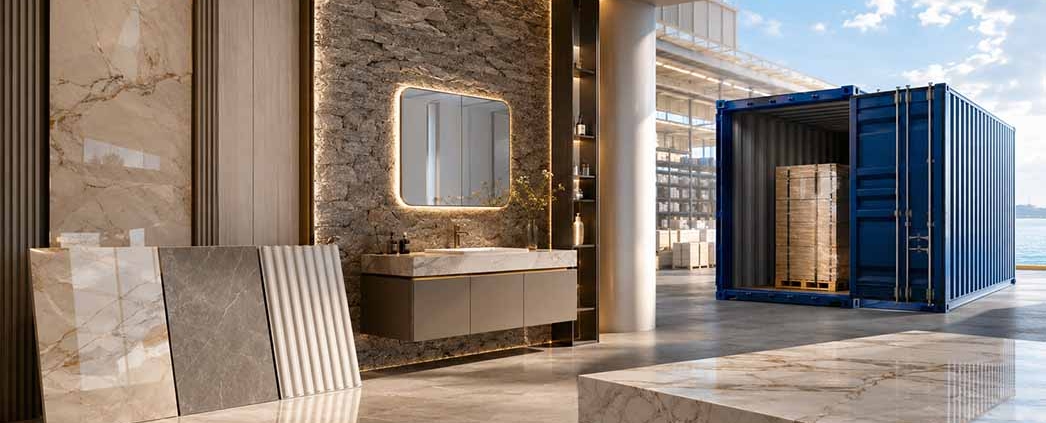
Our mixed container program solves this. You can fill one 20’ or 40’ container with:

SPC flooring (two or three colors/thicknesses)

LVT (luxury vinyl tile) for a different aesthetic

WPC outdoor decking (one or two profiles)

PVC ceiling panels or waterproof wall panels (to offer a full building solution)

Sintered stone slabs (countertops, kitchen islands)

Data point: 75% of our new Latin American customers reduced their trial costs by over 30% using this mixed‑container approach. Instead of betting USD 20,000 on a single SPC color, they spend the same amount to test five different SKUs.

4. Real Buyer Scenario: How a Flooring Wholesaler Could Expand with Mixed Container

While our documented case study involved a USD 70,000 order for sintered stone + sanitary ware, imagine a similar buyer focusing on flooring:

First mixed container (20’):

300 m² SPC flooring (two popular wood tones)

150 m² LVT (stone look, for bathrooms)

100 m² WPC outdoor decking (teak color)

A few sintered stone slabs (promotional samples for kitchen showrooms)

Total investment: Approximately USD 12,000–15,000 FOB

After 8 weeks of local sales:
The wholesaler identifies that SPC in light oak and WPC decking sell quickly, but the LVT stone look moves slowly.

Next order: Two full containers of the winning SKUs + a small mixed container for testing new colors.

This “test‑and‑scale” model is impossible under traditional single‑product MOQs. With our one container mixed loading, it is standard practice.

5. Sintered Stone for Kitchen Islands & Countertops – Add High‑Margin Items to Your Mix

Flooring buyers often have customers who also need kitchen or bathroom surfaces. Sintered stone (large slabs) is heat‑resistant, scratch‑proof, and non‑porous—perfect for kitchen islands, countertops, and bathroom vanities.
Can be mixed in the same container with flooring rolls or cartons (properly secured).

High perceived value – retail margins are significantly higher than flooring.

Complements flooring sales – a contractor buying SPC flooring for a new home is also a candidate for sintered stone countertops.

By adding a few sintered stone slabs to your first mixed container, you can test this premium category with almost zero additional logistics cost.

Step‑by‑Step Guide: Building Your First Flooring‑Focused Mixed Container
Step 1 – Choose your best guesses for local demand.
Start with 3–4 SKUs that have broad appeal:

SPC flooring in a warm medium‑brown (universal color)

SPC in a light gray (modern apartments)

WPC decking in one neutral wood tone

(Optional) Sintered stone, 2 slabs of a marble look

Step 2 – Request samples of each product.
We ship samples within 3–5 days. Perform simple tests: soak SPC in water overnight, step on the WPC decking with wet shoes, try to scratch the sintered stone. Let your local buyers see the quality.

Step 3 – Use our container‑mixing calculator.
Tell us your desired quantities per SKU. We will optimize palletization to fit everything into one container while protecting each product type.

Step 4 – Sell, track, and re‑order winners.
After the first container arrives, record which items sell within 30 days. Double down on those in your second order. Drop the slow movers or replace them with new tests in the next mixed shipment.

Conclusion: Flooring Imports Don’t Have to Be All‑or‑Nothing
The old way—committing full containers to a single flooring SKU—is risky, especially for new importers or those entering a fresh market segment. The smarter way is SPC flooring + WPC outdoor decking + mixed container MOQ. You test multiple products, reduce financial exposure, and discover your true best sellers with real market feedback.

Ready to configure your first mixed flooring container? Contact us with your target square meters and preferred colors. We will send you a custom loading plan and samples within 48 hours. No MOQ pressure, no hidden fees—just a low‑risk start to profitable flooring distribution.

Zero‑Formaldehyde Waterproof Wall Panels – One Container MOQ for Hotels & Schools

Zero-Formaldehyde Waterproof Wall Panels: How to Win Hotel & School Projects with One Container MOQ

For institutional buyers—hotels, schools, hospitals—two non‑negotiable requirements are zero formaldehyde and fast installation with minimal disruption. Traditional materials like MDF, gypsum, or ceramic tiles often fail on one or both fronts. Our solution combines waterproof wall panels (UV, carbon crystal, bamboo‑fiber, slatted) and SPC/LVT flooring with a one‑container mixed‑loading model. Latin American wholesalers using this approach have cut trial costs by over 30% while supplying project sites that demand immediate occupancy and strict environmental compliance.
Below are five proven reasons why this system works for institutional projects—and how you can start with just one mixed container.

1. Zero‑Formaldehyde Materials Meet Strict Export & Local Standards

Hotels, kindergartens, and clinics cannot tolerate off‑gassing from home materials. Our PVC‑based wall panels, SPC flooring, and ceiling panels are manufactured to zero‑formaldehyde formulas, compliant with international standards (e.g. CE, SGS, or ASTM).
Benefit: Rooms can be occupied immediately after installation—no ventilation waiting period.
Why it matters for wholesalers: You can sell to government‑backed school projects or healthcare chains that require documentation of low VOC emissions.
Real‑world context: A Latin American wholesaler who visited our Foshan showroom initially focused only on sintered stone and sanitary ware. After seeing our zero‑formaldehyde wall panels and flooring, he added them to his first 5‑container mix (USD 70,000). His end customers were local hotel chains demanding “green” certification.

2. Waterproof & Anti‑Mold – Essential for Bathrooms, Kitchens, and Basements

In humid environments (coastal Latin America, tropical zones, or simply leak‑prone basements), ordinary panels swell, warp, or develop black mold. Our waterproof wall panels are 100% moisture‑proof.
SPC flooring is also completely waterproof—unlike laminate or engineered wood.
WPC outdoor decking resists rain and humidity without rotting.
For a hotel with 200 bathrooms or a school with changing rooms, this means zero callbacks for mold remediation. For wholesalers, it means fewer warranty claims and repeat orders.

3. Snap‑on / Click‑lock Installation Saves 50% Labor Time

Traditional tile or stone installation requires skilled labor, adhesive, grout, and days of curing time. Our PVC decorative wall panels use a car‑lock design (or click‑lock for flooring) that goes directly onto rough walls or subfloors.
No leveling, no plastering, no grout.
A 100 m² hotel corridor can be completed in one day with two workers.
Quantified advantage: On a recent school refurbishment project in South America (using our carbon crystal wall panels and SPC flooring), the contractor reported 52% less installation time compared to ceramic tiles and gypsum boards. Less labor = higher profit margin for your local buyers.

4. Scratch‑Resistant & Easy‑Clean Surfaces Reduce Maintenance Costs

In high‑traffic areas (hotel lobbies, school hallways, hospital corridors), surfaces get quickly scratched or stained. Our UV coating on wall panels and flooring creates a durable, stain‑resistant layer.
Scratch resistant – luggage wheels, moving desks, or gurneys leave no marks.
Easy clean – a damp cloth removes marker, coffee, or mud.
Hotel housekeeping staff can clean rooms faster. School janitors spend less time scrubbing walls. Wholesalers can sell this as a “lower total cost of ownership” advantage, not just a material cost.

5. One Container Mixed Loading – Test Different Product Categories with Low Risk

This is the business model that makes all the above possible for a new importer. Instead of buying 2–3 containers of wall panels alone, you can combine:
Waterproof wall panels (choose from UV boards, carbon crystal, bamboo‑fiber, slatted grille)
SPC / LVT / WPC flooring
PVC ceiling panels
Sintered stone for islands or countertops
Sanitary ware (toilets, washbasins, faucets, vanities, jacuzzis)
All in one 20’ or 40’ container.
Data point: 75% of our new Latin American customers reduced their trial costs by >30% using this mixed‑container strategy. They start with one container, identify their three best‑selling SKUs, and then re‑order full containers of those items.
The wholesaler from the case study (USD 70,000 order, 5 containers) explicitly told us: “Mixing lets me offer a complete bathroom + wall + floor solution to my hotel clients without tying up capital in slow movers.”

Step‑by‑Step: How to Launch Your First Mixed Container for Institution‑Ready Products

Step 1 – Identify target projects in your market.
Are your buyers building budget hotels, renovating schools, or fitting out clinics? Focus on the product categories they need most. A typical starting mix:
40% waterproof wall panels (carbon crystal or UV boards)
30% SPC flooring (click‑lock, stone plastic composite)
20% sanitary ware (toilets + washbasins)
10% sintered stone (for kitchen islands or bathroom vanities)

Step 2 – Request zero‑formaldehyde and waterproof test samples.
We ship samples within 3–5 days. Test them in your local humidity or even submerge them in water for 48 hours. Show the results to your buyers.

Step 3 – Use our container‑mixing calculator (free).
Tell us your target quantity (e.g. 200 m² wall panels + 150 m² flooring + 50 toilets). We will optimize the loading plan to maximize product variety while staying within one 20’ or 40’ container.

Step 4 – After the first sell‑through, re‑order the winners.
Because you started with only one MOQ container, you can quickly drop slow SKUs and double down on best‑sellers. No long‑term commitment, no warehouse full of unsold stock.

Conclusion: Low‑Risk Entry into High‑Margin Institutional Projects

In 2026, Google favors content that provides genuine information gain. For importers, the real gain is knowing that zero‑formaldehyde waterproof wall panels + mixed container MOQ eliminates two classic barriers: health compliance and high initial inventory risk. Whether you supply hotels, schools, or residential projects, this combination allows you to test, learn, and scale profitably.
Ready to configure your first mixed container? Contact our team with your target square meters and product preferences. We will reply with a custom loading plan and samples within 48 hours.