Posts

LEED, EDGE, AQUA-HQE: Your Guide to Latin America Green Building Certifications 2026

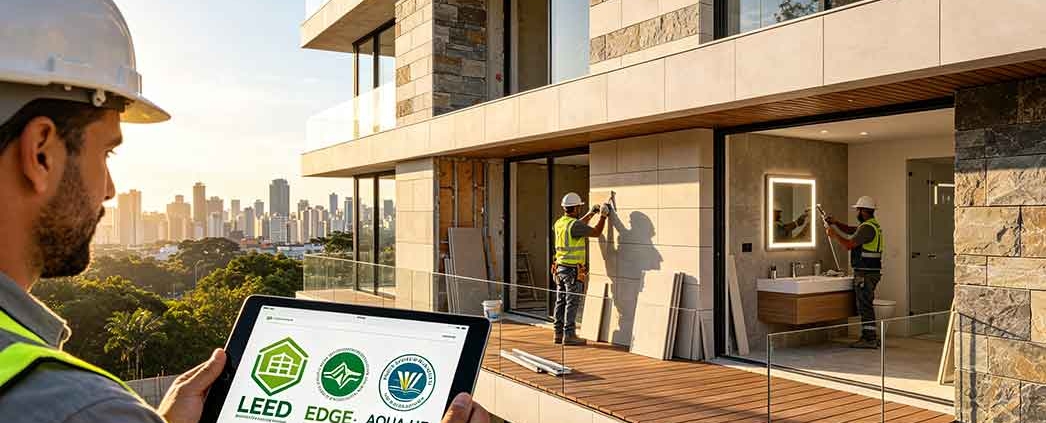
Green building certifications have become the “access language” for the Latin American building materials market. Without understanding these certification systems, it is impossible to grasp what your customers truly need and expect. LEED, EDGE, and AQUA-HQE — three major green building certification frameworks — are defining procurement standards across the region. For suppliers of ceramic tiles, porcelain tiles, floor tiles, bathroom vanities, sintered stone, flexible stone veneer, WPC decking, PVC wall panels, and waterproof wall panels, knowing these certifications is not optional — it is the price of entry.

The Three Major Certification Systems Explained

LEED (Leadership in Energy and Environmental Design)
Developed by the U.S. Green Building Council (USGBC), LEED is the most widely recognized green building certification globally. Brazil leads Latin America with over 1,000 LEED-certified projects, while adoption is growing rapidly in Colombia, Mexico, Chile, and Costa Rica. Many public projects across the region now mandate or give priority to LEED certification, making it essential for suppliers of building materials to understand LEED credit categories. Products like porcelain tiles with recycled content, sintered stone with regional sourcing, and low-VOC PVC wall panels can contribute valuable points toward LEED certification.
EDGE (Excellence in Design for Greater Efficiencies)
Developed by the International Finance Corporation (IFC), EDGE requires at least 20% energy savings, 20% water savings, and 20% reduction in embodied carbon in materials. This certification is particularly relevant for suppliers of water-efficient one-piece toilets, energy-saving LED mirrors, and durable WPC decking that reduces maintenance and replacement cycles. In Colombia, EDGE Advanced or LEED Gold/Platinum projects can access dedicated green financing, creating a strong commercial incentive for developers to specify EDGE-compliant materials.
AQUA-HQE (High Environmental Quality)
AQUA-HQE is a certification system that combines international standards with Brazilian regulations, making it highly influential in the Brazilian market. Based on the French HQE (Haute Qualité Environnementale) framework, AQUA-HQE is adapted to local climatic, regulatory, and cultural conditions. It evaluates buildings across 14 targets, including health, comfort, and environmental performance. For suppliers of bathroom vanities with sustainably sourced wood, flexible stone veneer with low environmental impact, and waterproof wall panels with low emissions, AQUA-HQE presents a clear pathway to market acceptance.

How Certifications Impact Building Material Procurement

Green building certifications impose clear technical specifications on building materials — from embodied carbon and recyclability to indoor air quality and VOC (Volatile Organic Compounds) content. Here is what each certification means for suppliers:
For ceramic and porcelain tiles, certifications reward products with recycled content, regional manufacturing, and low-emission glazes. A floor tiles supplier to Latin America who can document these attributes gains a competitive edge in LEED and EDGE projects.
For sintered stone and large slab countertops, LEED credits are available for materials with extended durability, low maintenance, and responsible sourcing. As a sintered stone supplier to Brazil and Colombia, demonstrating compliance with certification requirements is key to winning specification in high-end residential and commercial projects.
For flexible stone veneer and bendable stone panels, these innovative products contribute to design flexibility and thermal performance, earning credits under LEED’s Material & Resources category and EDGE’s embodied carbon metrics.
For WPC decking, WPC doors, and outdoor flooring, certifications reward materials with recycled content, long service life, and low maintenance. As a WPC decking supplier to Latin America, highlighting these attributes is essential for gaining acceptance in LEED and EDGE projects.
For bathroom vanities, one-piece toilets, and LED mirrors, EDGE’s water and energy efficiency requirements directly align with product performance. Suppliers who can provide third-party test reports for water consumption and energy use will win specifications in EDGE-certified developments.
For PVC wall panels and waterproof wall panels, low VOC emissions and indoor air quality compliance are critical for LEED’s Indoor Environmental Quality category and AQUA-HQE’s health targets. As a green panels supplier to South America, documenting these properties is the key to unlocking project specifications.
Suppliers who can provide the required test reports and compliance documentation will secure a significant competitive advantage. The ability to demonstrate certification alignment is becoming as important as product quality itself.

Recommendations for Chinese Suppliers

For Chinese building material suppliers looking to enter the Latin American market, building green compliance capabilities should be a top priority. Here are three essential steps:
First, invest in product certification. Understand which LEED, EDGE, or AQUA-HQE credits your products can contribute to, and obtain the necessary third-party testing and certifications. For ceramic tiles, sintered stone, and flexible stone veneer, this may involve recycled content verification; for one-piece toilets and LED mirrors, water and energy efficiency testing; for PVC wall panels and WPC decking, VOC emissions and durability testing.
Second, establish a compliance documentation system. Latin American buyers require comprehensive technical files, test reports, and certification documentation. Having these documents ready in both English and Spanish/Portuguese will significantly accelerate procurement decisions.
Third, build relationships with local certification consultants. Partnering with experienced local advisors who understand each country’s regulatory nuances will help navigate the complex certification landscape and position your products effectively.
LEED, EDGE, and AQUA-HQE are not just acronyms — they are the gateways to Latin America’s green building revolution. For suppliers of ceramic tiles, porcelain tiles, floor tiles, bathroom vanities, sintered stone, flexible stone veneer, WPC decking, PVC wall panels, and waterproof wall panels, understanding these certification systems is essential for success. The companies that invest early in certification alignment, documentation, and local partnerships will capture significant market share as the region’s green building regulations continue to tighten. The window of opportunity is open — compliance is the key.

Brazil Green Building Materials Market 2026: COP30 Host Drives Demand for Tiles, Sintered Stone, WPC Decking & More

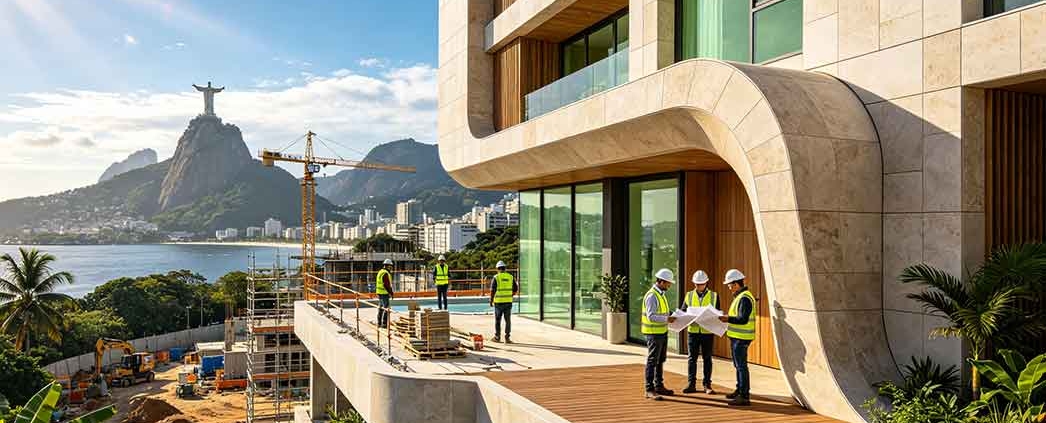
As host of COP30 in 2025, Brazil has set a global benchmark in green building. São Paulo now ranks 12th worldwide for sustainability‑certified buildings, with 71% of luxury developments holding a green seal – surpassing Miami (66%), Los Angeles (65%), and New York (61%). Brazil’s green building practices are reshaping procurement standards across the entire Latin American building materials market, creating unprecedented opportunities for suppliers of ceramic tiles, porcelain tiles, floor tiles, bathroom vanities, sintered stone, flexible stone veneer, WPC decking, and waterproof wall panels.

Brazil’s Green Building Policy Framework

Brazil has built a comprehensive regulatory system to drive sustainable construction. The ABNT NBR 15575 standard defines performance requirements for safety, durability, and thermal efficiency, while NBR 15220 and NBR 16401 regulate building thermal performance and HVAC systems. From 2027, all federal government buildings must achieve the highest ENCE energy efficiency rating (level A), spurring demand for insulation, high‑performance glazing, and efficient fixtures.
The country leads Latin America with over 1,000 LEED‑certified projects, alongside widespread adoption of AQUA‑HQE and EDGE certifications. In a bold move, Rio de Janeiro’s INEA Resolution No. 318/2025 allows companies adopting ESG standards to receive up to six‑year extensions on environmental licenses – a powerful financial incentive that accelerates green material adoption across all construction segments.

Market Opportunities for Green Building Materials

Demand for sustainable materials is expanding rapidly from public works into commercial and residential construction, creating substantial opportunities across multiple product categories.
Ceramic and porcelain tiles are experiencing strong demand, driven by Brazil’s booming residential and hospitality sectors. As a leading floor tiles supplier to Latin America, companies that offer eco‑friendly production processes and recycled content are well‑positioned to capture market share. The shift toward larger‑format porcelain tiles aligns with contemporary architectural trends favoring seamless, minimalist interiors.
Sintered stone is gaining significant traction for kitchen countertops and large‑format wall cladding. Architects and developers are increasingly specifying sintered stone slabs for their durability, heat resistance, and low maintenance – qualities that make them ideal for both residential kitchens and high‑traffic commercial spaces. As a sintered stone supplier to Brazil, manufacturers offering large slab countertops in varied finishes are seeing growing order volumes.
Flexible stone veneer and bendable stone products are emerging as preferred solutions for curved facades and complex architectural surfaces. As green building certifications reward design innovation, the demand for flexible stone panels is rising across Brazil’s high‑end commercial and institutional projects.
The outdoor living trend is fueling demand for WPC decking, WPC doors, and other wood‑plastic composite products. As a WPC decking supplier to Latin America, manufacturers offering weather‑resistant, low‑maintenance outdoor flooring solutions are finding strong uptake in resort developments, residential projects, and hospitality spaces.
Bathroom vanities, one‑piece toilets, and LED mirrors are in high demand as Brazilian consumers increasingly prioritize design, water efficiency, and smart features. The growing middle class and rising standards in residential construction are creating a vibrant market for stylish, water‑saving bathroom solutions.
PVC wall panels and waterproof wall panels are rapidly replacing traditional materials in wet areas such as bathrooms, kitchens, and laundry rooms. As a green panels supplier to South America, companies offering moisture‑resistant, easy‑to‑install, and low‑VOC wall cladding solutions are gaining ground in both residential and commercial segments.
Across all these segments, the shift from voluntary preference to mandatory compliance is opening substantial import substitution and market expansion opportunities.

What This Means for Building Material Suppliers

To succeed in Brazil’s largest economy, compliance capability is the new competitive edge. Suppliers must first document alignment with ABNT performance standards and understand how their products contribute to LEED, AQUA‑HQE, or EDGE certification credits. Second, they need to stay ahead of evolving energy and environmental regulations. Finally, building localized technical support – including Portuguese‑language documentation and responsive customer service – is critical for earning trust with Brazilian developers and contractors.
For suppliers of ceramic tiles, porcelain tiles, floor tiles, bathroom vanities, sintered stone, flexible stone, WPC decking, PVC wall panels, and waterproof wall panels, the Brazilian market offers a rare convergence of regulatory tailwinds and consumer demand. Those who invest in product innovation, green certification, and local partnerships will capture significant share in this dynamic and fast‑growing market.
As COP30 puts Brazil’s sustainability efforts in the global spotlight, the green building materials market is entering a decade of structural growth. From porcelain tiles and sintered stone countertops to flexible stone veneer and WPC outdoor flooring, every product category presents substantial opportunities for forward‑thinking suppliers. Companies that invest in regulatory compliance, product innovation, and local presence will capture significant share in this dynamic and fast‑growing market.